

Pre-mission Preparation
Assess and configureStart from mission goals, field conditions, and risk boundaries to complete reconnaissance, equipment selection, communications planning, training, and staging.
Map equipment choices to preparation, field execution, and post-mission support.
Core capabilities follow the mission lifecycle, showing the operating need, equipment options, and support services at each stage. Product systems remain the place for model-level specifications.
Start from mission goals, field conditions, and risk boundaries to complete reconnaissance, equipment selection, communications planning, training, and staging.
Combine tactical optics and mission equipment across observation, identification, communications, command, field control, and electronic countermeasures.
Cover evidence handling, personnel placement and escort, medical and security support, archiving, maintenance, replenishment, and review.
Start from mission goals, field conditions, and risk boundaries to complete reconnaissance, equipment selection, communications planning, training, and staging.
Showing: Assess and configure

A satellite-communications signal jammer covering the 10.7–12.8 GHz low and high bands, with sweep operation and host-computer adjustment.

A remote voice-signal acquisition and analysis system comprising passive acoustic beacons, active antennas, and an analysis host.
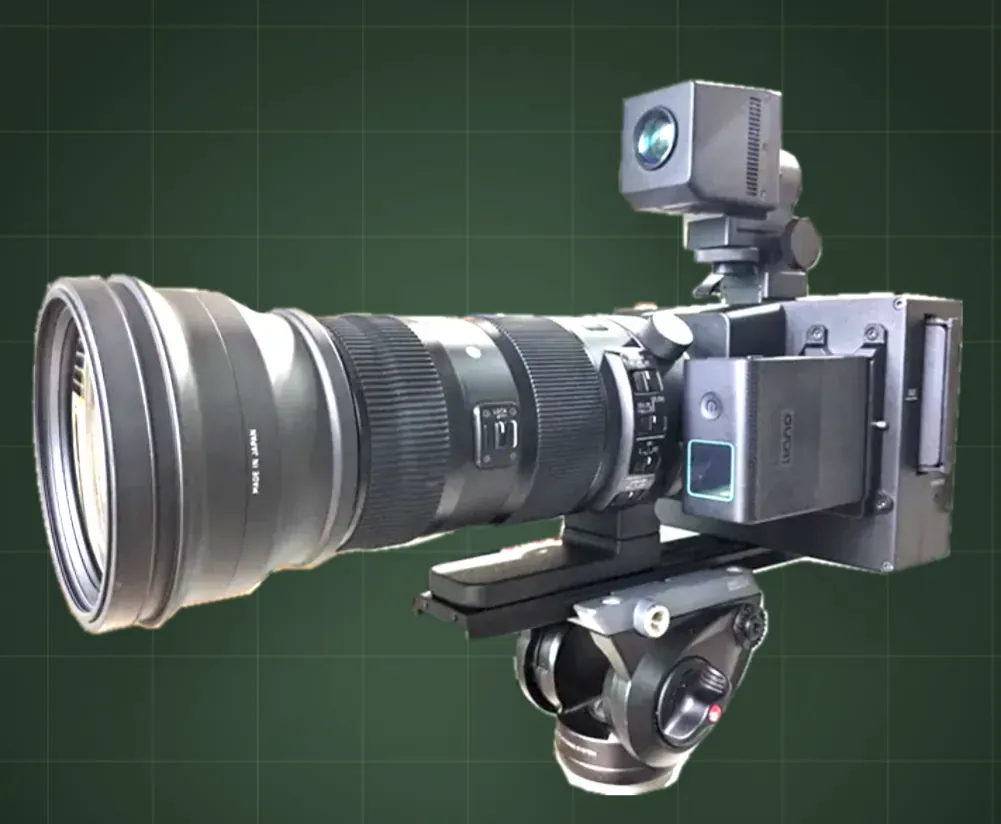
A full-color, ultra-high-definition long-range video evidence system for very low-light conditions, also supporting daytime imaging and portable standalone operation.

A 640×512, 12 μm clip-on thermal system that switches quickly between front-mounted aiming and handheld observation.

An all-weather long-range binocular platform integrating thermal, low-light, visible-light, laser-ranging, and positioning channels.

A portable 640 × 512, 12 μm thermal monocular with a 35 mm F0.9 objective, 800 m laser ranging, and one-hand control.
